

Deconstructing a Media Artifact: A Journal by Salaam Sims

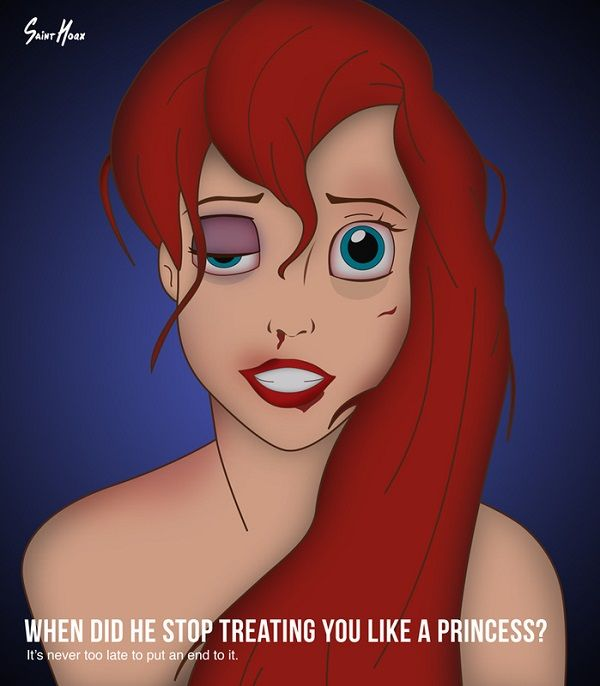
The domestic violence awareness campaign created by Saint Hoax uses several design elements to create an immediate emotional response. The most noticeable design element is color. Ariel's bright red hair stands out sharply against the dark blue background, drawing the viewer's attention directly to her face. The bruises, swollen eye, cuts, and fearful facial expression create a sense of pain and vulnerability, making the image difficult to ignore. The word choice is also powerful. The question, "When did he stop treating you like a princess?" references the fairy tale many people associate with Disney princesses while contrasting it with the reality of domestic abuse. The smaller statement, "It's never too late to put an end to it," provides hope and encourages victims to seek help. The use of blank space is intentional because the simple background and minimal text eliminate distractions, allowing viewers to focus entirely on Ariel's injuries and the campaign's message. The image was likely created using digital illustration software such as Adobe Photoshop or Adobe Illustrator, allowing the artist to combine realistic shading, typography, and graphic design into a visually striking public awareness campaign.
The target audience includes women experiencing domestic violence, as well as their families, friends, and the general public. The campaign also targets younger adults and social media users who recognize Disney princesses and understand the symbolism behind fairy tales. By transforming a beloved childhood character into a victim of abuse, the designer encourages viewers to realize that domestic violence can affect anyone, regardless of how perfect a relationship may appear from the outside. I believe this approach makes the campaign highly effective because it immediately captures attention while encouraging empathy and conversation about an issue that is often hidden.
Although the artifact is very effective, I would recommend a few design improvements. First, I would include the phone number or website of a domestic violence hotline so viewers immediately know where to seek help after seeing the message. Second, I would add a small logo or information identifying the organization behind the campaign to increase credibility and provide additional resources. Finally, I would consider creating similar versions featuring male victims and individuals from diverse backgrounds to reinforce that domestic violence affects people of all genders, ages, and cultures. These additions would make the campaign more inclusive while providing viewers with immediate access to support services, ultimately increasing the overall effectiveness of the message.


Comments